

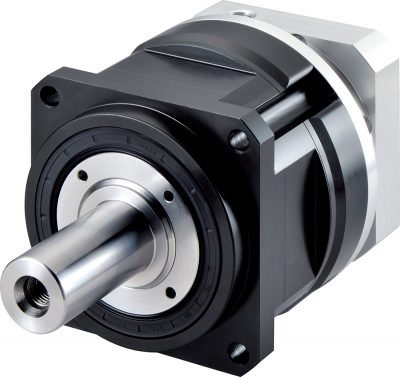
heavy duty gearbox reducers

L-type gearbox reducer
Normal gearbox reducer
Planetary Gearbox Reducer: The Multitasking Powerhouse in Modern Industry
If you want to know more about reducers, can go to visit our Youtube Chanel.
Introduction: The Heart of Precision Motion Control
In the intricate world of power transmission, the planetary gearbox reducer stands out as a cornerstone of modern engineering. Renowned for its exceptional combination of compact design, high torque density, and superior efficiency, this type of speed reducer has become an indispensable component across a breathtakingly wide array of industries. Unlike traditional parallel shaft reducers, the planetary gear system—with its central sun gear, orbiting planet gears, and outer ring gear—distributes load across multiple contact points. This fundamental design principle is what grants the planetary gear reducer its remarkable strength, stiffness, and smooth operational characteristics. This article delves deep into the diverse and critical applications of the planetary gearbox reducer, exploring how this versatile technology drives innovation, precision, and reliability in fields ranging from the micro-scale of robotics to the massive forces of renewable energy.
1. Industrial Automation & Robotics: The Backbone of Precision
The rise of Industry 4.0 and advanced automation has been significantly fueled by the capabilities of the planetary gearbox reducer. In this domain, precision, repeatability, and compactness are paramount.
-
Articulated Robots: Each joint in a six-axis industrial robot typically relies on a high-precision planetary reducer. These units provide the high torque, low backlash (often less than 1 arc-minute), and high torsional stiffness required for tasks like welding, painting, assembly, and material handling. The compact nature of the planetary design allows for slimmer robot arm designs without sacrificing power.
-
Collaborative Robots (Cobots): The demand for safer, smaller cobots working alongside humans has pushed the development of lightweight, low-backlash planetary gearboxes. These reducers must deliver smooth, precise motion while sometimes integrating features for force sensing and compliance.
-
Linear Actuators and Gantry Systems: Many automated linear motion systems use planetary gearboxes mounted to servo motors to drive ball screws or belt drives. The gearbox reducer here increases torque, improves positioning accuracy by reducing reflected inertia, and protects the motor from high axial loads.
Key Requirement: Extremely low backlash, high torque-to-volume ratio, and high cyclic durability.
2. Renewable Energy: Harnessing Nature’s Power
Planetary gearbox reducers are fundamental to the efficient conversion of natural forces into usable electricity.
-
Wind Turbines: This is one of the most demanding applications. The main planetary gear reducer in a wind turbine connects the slow-turning rotor blades (typically 10-20 RPM) to the high-speed generator (around 1,500 RPM). These gearboxes must withstand unpredictable, massive fluctuating loads from wind gusts, storms, and turbulence for decades with minimal maintenance, especially in offshore installations. Modern multi-megawatt turbines often use sophisticated multi-stage planetary or planetary-parallel hybrid designs to manage the immense torque.
-
Solar Tracking Systems: To maximize energy capture, photovoltaic panels and concentrated solar power systems use solar trackers. Precision planetary drives provide the reliable, robust, and slow rotational movement needed to accurately follow the sun’s path across the sky throughout the day, often in harsh desert environments.
Key Requirement: Exceptional durability, high overload capacity, resistance to extreme environmental conditions, and maximum reliability for minimal maintenance.
3. Aerospace & Defense: Where Reliability is Non-Negotiable
In aerospace and defense, components must perform flawlessly under extreme stress, temperature variations, and with an absolute minimum of weight.
-
Aircraft Actuation Systems: Planetary gearboxes are used in flight control systems to move flaps, slats, and rudders. They are also critical in landing gear retraction systems. Here, the planetary reducer offers high power density and failsafe operation.
-
Helicopter Transmissions: The main rotor transmission of a helicopter is a masterpiece of planetary gearing. It must transmit enormous engine power to the rotor at a reduced speed with absolute reliability, as failure is catastrophic.
-
Satellite Mechanisms: In space applications, planetary gear drives are used in antenna positioning systems and solar array deployment mechanisms. They are valued for their compactness, reliability in a vacuum, and ability to operate across extreme temperature ranges.
Key Requirement: Ultimate reliability, maximum power-to-weight ratio, and ability to function in extreme environments (temperature, vacuum, vibration).
4. Automotive & Electric Vehicles (EVs): Driving the Future
The automotive industry’s shift towards electrification has elevated the importance of a specific type of planetary gearbox reducer.
-
Electric Vehicle Drivetrains: Most battery-electric vehicles (BEVs) use a single-speed, fixed-ratio planetary gear reducer as the core of the e-drive system. It efficiently reduces the high rotational speed of the electric motor to the optimal speed for the wheels. Its compactness, efficiency, and quiet operation are ideal for EVs, contributing directly to extended range and performance.
-
Hybrid Vehicle Transmissions: Many hybrid systems, like the Toyota Prius’s famous Power Split Device (PSD), utilize complex planetary gear sets to seamlessly blend power from the internal combustion engine and electric motor(s).
-
Automated Systems: From electric power steering (EPS) systems to adjustable seats and sunroofs, smaller precision planetary gearboxes provide the necessary torque and control in various vehicle subsystems.
Key Requirement: High efficiency (to maximize EV range), compactness, low noise/vibration, and cost-effectiveness for mass production.
5. Material Handling & Heavy Machinery: Power Under Pressure
Industries that move heavy loads continuously depend on the robustness of planetary gear systems.
-
Mining & Construction Equipment: Excavators, cranes, draglines, and conveyor drives use heavy-duty planetary reducers, often integrated directly into wheel hubs or track drives. Their ability to handle shock loads, provide high torque in a compact envelope, and offer excellent durability makes them the standard.
-
Packaging & Food Processing Machinery: High-speed packaging lines require precise synchronization of numerous motors. Planetary gearboxes attached to servomotors ensure accurate speed control and high torque for filling, capping, and labeling operations, often meeting strict hygiene standards.
-
Marine & Offshore: Winches, crane drives, and propulsion systems on ships and offshore platforms utilize large planetary gearboxes to handle the massive forces involved in anchor handling, towing, and lifting.
Key Requirement: Very high torque capacity, superior shock load resistance, robust sealing against dust and moisture, and long service life with high uptime.
6. Medical & Semiconductor Equipment: The Demand for Ultra-Precision
At the cutting edge of technology, where movements are microscopic and precision is measured in microns, specialized planetary gearbox reducers play a vital role.
-
Medical Robotics: Surgical robots, such as those used for minimally invasive procedures, require absolutely precise and backlash-free motion. Miniature, sterilizable planetary gearheads are essential in these manipulator arms.
-
Diagnostic Equipment: MRI and CT scan machines use precision reducers to position patients and imaging components smoothly and quietly.
-
Semiconductor Manufacturing: In wafer handling, lithography, and inspection machines, any vibration or positional error can ruin millions of dollars worth of product. High-precision, cleanroom-compatible planetary gear reducers enable the nanoscale accuracy required.
Key Requirement: Ultra-low backlash, exceptional smoothness of motion, cleanliness (no lubricant leakage), and sometimes compatibility with sterilization or cleanroom protocols.
Conclusion: A Universal Solution for Evolving Challenges
The planetary gearbox reducer is far more than just a simple component; it is a versatile, high-performance solution that adapts to the unique demands of countless industries. From the relentless forces in a wind-swept turbine to the delicate movements of a surgical robot, its fundamental principles of load sharing, compact design, and high efficiency make it the preferred choice for engineers worldwide. As technology advances—driving needs for greater precision, higher power density, and smarter integration—the evolution of the planetary gear reducer will continue to be at the heart of industrial innovation. When selecting a motion control solution, considering the proven versatility and performance of a planetary gear reducer is a step toward achieving greater reliability, efficiency, and precision in any application.


Leave A Comment