Home
Home2026-09-03T01:55:34+00:00
gearbox reducer
Heavy duty planetary Gearboxes
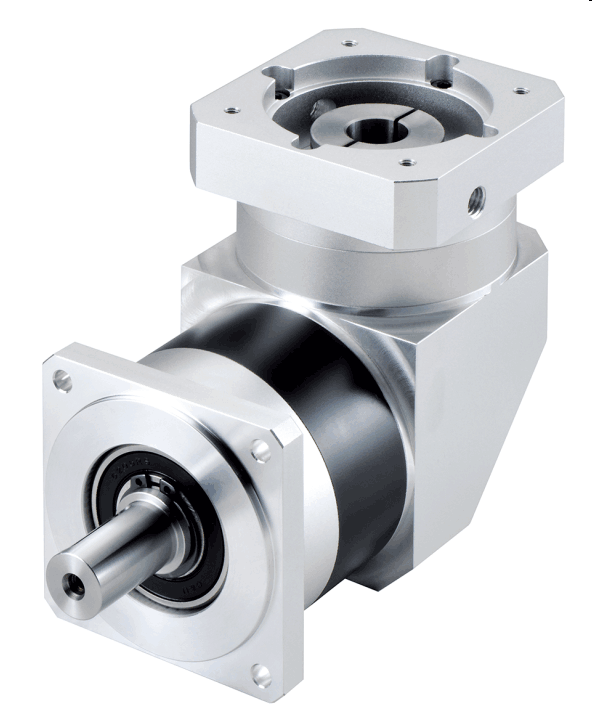
gearbox reducer
L-type Planetary Gearboxes
gearbox reducer
Normal planetary Gearbox
Gearbox reducer with DC motors
gearbox with DC motors
Gearbox reducer with servo motors
Gearbox reducers
gearbox reducers

WorldWide Electric: Your Trusted Manufacturer for High-Performance Gearbox Reducer Solutions

As a premier industrial manufacturer established in 1998 and headquartered in Rochester, New York, WorldWide Electric Corporation stands at the forefront of designing and producing reliable, high-quality gearbox reducers for a global clientele. Our expertise extends across a comprehensive range of power transmission products, including electric motors and motor controls, solidifying our role as a single-source supplier for your most demanding applications.

Engineered for Excellence: Our Gear Reducer Capabilities

Our manufacturing philosophy centers on precision, durability, and application-specific engineering. We understand that selecting the optimal gearbox reducer is critical for operational efficiency, cost-effectiveness, and system longevity. Our state-of-the-art facility is equipped to produce and supply various reducer types to meet diverse industrial requirements:

  • Worm Gear Reducers: We manufacture compact and cost-effective worm gearbox reducers, ideal for applications requiring right-angle power transmission and high reduction ratios in a simple, robust package.

  • Helical Gear Reducers: For applications demanding smooth, quiet operation and high load capacity with parallel or perpendicular shafts, our helical gear reducers offer superior performance and extended service life.

  • Bevel Gear Reducers: When shaft orientation must change, our precision-machined bevel gearbox reducers provide reliable power transmission at various angles, available in both spur and helical tooth configurations for optimal performance.

  • Planetary Gear Reducers: Designed for applications requiring high torque density, exceptional durability, and coaxial shaft arrangement, our planetary gear reducers are engineered to withstand significant impact loading in a compact footprint.

  • Low-Backlash Gear Reducers: We specialize in manufacturing low-backlash gearbox reducers, essential for precision motion control applications involving frequent starts, stops, and reversals.

Our Commitment: Quality, Support, and Rapid Delivery

At WorldWide Electric, we pride ourselves on more than just manufacturing. We are a partner dedicated to your success. Our commitment is reflected in:

  • Rigorous Quality Control: Every gearbox reducer is built to exacting standards, ensuring reliable performance under challenging thermal, vibrational, and operational environments.

  • Unmatched Customer Support: Our 24/7 customer support team is ready to provide technical assistance and ensure your operations run smoothly, without interruption.

  • Quick-Shipping Promise: We understand the urgency of your needs. Our efficient logistics and inventory management enable us to ship products promptly, minimizing downtime.

Optimize Your Systems with the Right Gear Reducer

Choosing the correct gearbox reducer involves balancing factors such as load capacity, operational efficiency, noise, spatial constraints, and thermal management. WorldWide Electric provides the engineering expertise and product range to help you make the ideal selection for enhanced productivity and reduced total cost of ownership.

Discover how WorldWide Electric’s gearbox reducers can power your applications. Visit our website to explore our full product portfolio and learn more about our custom manufacturing capabilities.

Planetary Gearbox Reducer: Driving Precision and Power Across Five Critical Industries

Introduction: The Mechanical Heart of Modern Automation

A planetary gearbox reducer is an epicyclic gear system engineered to reduce rotational speed while simultaneously multiplying output torque. At its core, the design consists of a central sun gear, multiple planet gears that orbit around it, and an outer ring gear that meshes with the planet gears. Because the load is distributed evenly across several planet gears, these reducers deliver exceptional torque density, high efficiency—often exceeding 95% per stage—and remarkable reliability within a compact footprint.

The global planetary gear reducer market has witnessed substantial expansion in recent years. Valued at approximately USD 2.15 billion in 2021, the market is projected to reach USD 2.76 billion by the end of 2026, driven primarily by the accelerating adoption of automation, robotics, and renewable energy infrastructure worldwide.

Looking further ahead, industry forecasts suggest the market could approach USD 3.9 billion by 2033, reflecting a compound annual growth rate (CAGR) of roughly 5.1%.

What makes the planetary gearbox reducer so indispensable is its unique combination of coaxial input-output alignment, superior power-to-weight ratio, and the ability to handle extreme torque loads in space-constrained environments. From the surgical suite to the wind turbine nacelle, from automated warehouses to agricultural combines, this technology serves as the invisible backbone of modern mechanical systems. This article explores five critical industries where planetary gear reducers are not merely components—but foundational enablers of technological progress.

1. Industrial Robotics and Industrial Equipment

1. Industrial Robotics and Industrial Equipment

1.1 Six-Axis Industrial Robotic Arms

In the realm of industrial robotics, precision is paramount. A six-axis articulated robot contains six rotary joints—each requiring a compact, high-torque drive solution capable of sub-arc-minute positioning accuracy. While heavy-duty joints often employ RV or harmonic reducers, the planetary gearbox reducer dominates in collaborative robots (cobots), SCARA systems, and medium-payload articulated arms where cost-efficiency and high rigidity must coexist.
Within each joint module, a servo motor paired with a precision planetary reducer converts high-speed, low-torque motor output into the slow, powerful rotation required for welding, assembly, and material handling. The coaxial design of planetary systems allows motors and reducers to be stacked along the arm’s axis, minimizing the robot’s envelope and maximizing workspace density. Modern precision planetary gearboxes achieve backlash as low as 1–3 arc minutes, enabling repeatable positioning accuracy within ±0.05 mm—essential for electronics assembly and automotive spot-welding operations.

1.2 CNC Machine Tools and Machining Centers

Computer Numerical Control (CNC) machine tools represent another massive deployment ground for planetary reduction drives. In vertical and horizontal machining centers, planetary reducers serve two primary functions: driving the servo axes (X, Y, Z) and actuating automatic tool changers (ATCs).
For axis feed drives, the planetary gearbox reducer amplifies servo motor torque to overcome cutting forces while maintaining nanometer-level trajectory fidelity. High-precision斜齿 (helical) planetary units with backlash below 8 arc seconds are increasingly favored in five-axis联动 machining centers, where simultaneous contouring of complex aerospace components demands zero lost motion. The reducer’s high torsional stiffness suppresses chatter during heavy cuts, extending tool life and improving surface finish.
In ATC applications, compact planetary gear motors drive cam mechanisms that exchange tools in under 2 seconds. The reducer’s ability to withstand frequent start-stop cycles—often exceeding 100,000 cycles per year—makes it far more durable than conventional worm or spur gear alternatives.

1.3 Automated Production Lines

Beyond robots and machine tools, planetary gear reducers permeate general factory automation. Pick-and-place modules, rotary indexing tables, packaging machinery, and palletizing systems all rely on these drives for synchronized motion. The modular nature of planetary gearheads allows system integrators to specify exact reduction ratios—from 3:1 to 100:1 or higher—enabling standardized motor platforms to serve diverse mechanical loads.

2. New Energy: Solar Photovoltaic and Wind Power Applications

2. New Energy: Solar Photovoltaic and Wind Power Applications

2.1 Solar Tracking Systems

As the world accelerates its transition toward renewable energy, the planetary gearbox reducer has emerged as a critical enabler of solar photovoltaic (PV) efficiency. Fixed-tilt solar panels capture only a fraction of available sunlight compared to tracking systems that follow the sun’s diurnal and seasonal paths. Single-axis trackers boost energy yield by 20–25%, while dual-axis systems can achieve gains exceeding 35%.
The challenge lies in driving hundreds of square meters of panel arrays with micron-level precision under variable wind and snow loads. Planetary slew drives—often integrated with worm gears for self-locking capability—are mounted at the pivot points of tracking structures. These reducers must deliver high holding torque to prevent back-driving during gusts, while consuming minimal energy during tracking motion. Sealed planetary gearboxes with IP65 or higher protection ratings withstand decades of UV exposure, temperature cycling from −40°C to +80°C, and abrasive dust without lubricant degradation.
In dual-axis trackers, azimuth and elevation drives both employ planetary reduction systems. The azimuth drive typically handles the greater torque requirement, as it must rotate the entire array mass horizontally against wind drag. Modern tracker manufacturers specify planetary reducers with 20–30-year design lives, matching the expected service life of PV modules themselves.

2.2 Wind Turbine Main Gearboxes

Wind energy represents one of the most demanding applications for planetary gear technology. A modern multi-megawatt wind turbine operates with rotor speeds between 10 and 20 RPM, while the generator requires 1,000–1,800 RPM for efficient power conversion. Bridging this speed gap demands enormous torque multiplication—often exceeding 1,000:1 total reduction—within the confined space of a nacelle mounted 100 meters above ground.

The solution is a hybrid planetary-parallel shaft gearbox. The low-speed stage employs one or two planetary gear sets to handle the primary torque multiplication. Planet gears distribute the massive rotor torque across multiple contact points, preventing any single gear from bearing excessive load.

The high-speed stage transitions to parallel helical gears that drive the generator.

Recent developments in offshore wind have pushed turbine capacities beyond 15 MW, with some prototypes exceeding 26 MW.

These mega-turbines demand planetary gearbox reducers capable of handling torque loads measured in meganewton-meters, while maintaining efficiency above 97% to minimize heat generation in the nacelle. Advanced lubrication systems, condition monitoring sensors, and hybrid ceramic bearings have become standard features in these extreme-duty reducers.

3. Logistics Automation Equipment

3. Logistics Automation Equipment

3.1 AGV and AMR Drive Systems

The explosive growth of e-commerce has catalyzed massive investment in automated logistics. Autonomous Guided Vehicles (AGVs) and Autonomous Mobile Robots (AMRs) navigate warehouse floors to transport inventory, and their drive wheels almost universally incorporate planetary gearbox reducers.
The design challenge is severe: the reducer must fit within the wheel hub, deliver sufficient torque to accelerate loaded vehicles weighing hundreds of kilograms, and provide electromagnetic braking for safety—all while operating 16–24 hours daily. Wheel-hub planetary drives typically feature ratios between 20:1 and 50:1, with integrated parking brakes and absolute encoders for dead-reckoning navigation.
Unlike traditional gearmotors, in-wheel planetary reducers eliminate chain and belt drives, reducing maintenance and eliminating points of failure. Their high efficiency (typically 94–96%) extends battery life, a critical factor in AMR fleets where charging downtime directly impacts throughput. Leading logistics providers now deploy fleets exceeding 100,000 mobile robots globally, each relying on planetary reduction technology for propulsion.

3.2 Automated Storage and Retrieval Systems (AS/RS)

In high-bay warehouses, stacker cranes traverse aisles at speeds up to 6 m/s and lift pallets to heights exceeding 40 meters. The travel, lift, and fork mechanisms all depend on planetary gear reducers. Travel drives use wheel-mounted planetary gearmotors with regenerative braking to dissipate kinetic energy during deceleration. Lift mechanisms employ high-ratio planetary winch drives that can suspend multi-ton loads with zero backlash holding.
The precision requirement is equally demanding: stacker cranes must position pallets within ±3 mm to ensure smooth entry into rack cells. Planetary reducers with helical gearing and preloaded bearings achieve the necessary stiffness, while integrated absolute encoders closed-loop with servo drives maintain positioning accuracy across thousands of cycles per day.

3.3 Sorting and Conveyor Systems

High-speed parcel sorting facilities—handling over 100,000 items per hour—use tilt-tray sorters, cross-belt sorters, and shoe sorters driven by thousands of small planetary gear motors. Each divert mechanism requires rapid actuation (under 200 ms) with precise angular control. Compact 36 mm and 42 mm planetary gearheads paired with brushless DC motors provide the torque density and response speed necessary for these high-throughput applications.

4. Precision Medical Equipment

4. Precision Medical Equipment

4.1 Surgical Robotics

Perhaps nowhere is the precision of a planetary gearbox reducer more consequential than in robotic surgery. Systems like the da Vinci surgical platform employ multiple articulated arms, each with 6–7 degrees of freedom, to manipulate instruments inside a patient’s body through incisions as small as 8 mm.
The joint actuators must deliver smooth, backlash-free motion with force feedback resolution measured in millinewtons. While harmonic drives dominate the wrist joints due to their zero-backlash characteristics, planetary reducers are extensively used in the proximal arm joints—shoulder, elbow, and insertion axes—where higher torque and compact packaging are required. These reducers must operate silently (below 45 dB) to avoid distracting surgical teams, and their lubricants must be biocompatible or fully sealed to prevent any contamination risk.
Miniature planetary gearheads with diameters as small as 16 mm now enable the development of next-generation handheld surgical robots and endoscopic instruments, bringing robotic precision to procedures previously considered too delicate for automation.

4.2 CT and MRI Scanner Gantry Drives

Computed Tomography (CT) scanners rotate an X-ray tube and detector array around the patient at speeds exceeding 200 RPM, completing a full body scan in under 0.35 seconds. The rotating gantry—weighing hundreds of kilograms—must accelerate and decelerate with extreme smoothness to prevent image artifacts caused by vibration.
Planetary gear reducers integrated into the gantry drive system provide the necessary torque multiplication while maintaining constant angular velocity. The reducer’s low inertia design minimizes the energy required to spin up the gantry, reducing thermal load on the slip-ring assembly. In MRI systems, non-magnetic planetary gearheads fabricated from specialized alloys or engineering polymers avoid interference with the powerful magnetic field, while still delivering precise patient table positioning.

4.3 Rehabilitation Robotics and Exoskeletons

Wearable rehabilitation robots and powered exoskeletons assist patients with mobility impairments by providing motorized joint assistance at the hip, knee, and ankle. These devices face severe weight and power constraints: the actuator for a knee joint must deliver 30–50 Nm of torque while adding less than 2 kg to the limb.
Compact planetary gear reducers paired with frameless torque motors offer the highest torque-to-weight ratio available for such applications. The reducer’s efficiency directly impacts battery life—critical for devices meant to be worn for 8+ hours. Force-sensitive control algorithms rely on the gearbox’s low backlash to accurately infer patient intent from motor current, enabling natural gait assistance.

4.4 Dental and Laboratory Equipment

In dental implantology, handpieces must deliver controlled torque at low speeds (15–40 RPM) for osteotomy preparation. Miniature planetary gearheads within these handpieces reduce high-speed micro-motor output while maintaining sterilization compatibility through sealed, autoclavable housings. Similarly, automated laboratory pipetting robots and pharmaceutical dispensing systems use sub-miniature planetary drives to achieve microliter-level liquid handling accuracy.

5. Engineering Equipment and Agricultural Machinery

5. Engineering Equipment and Agricultural Machinery

5.1 Excavator Swing Drives

In construction machinery, the excavator’s upper structure must rotate 360 degrees relative to the undercarriage to position the bucket accurately. This swing motion is powered by a planetary swing drive—typically a planetary gear set combined with a slewing bearing—that must withstand the full overturning moment of the excavated load.
Large mining excavators use massive planetary reducers with output torques exceeding 500 kNm. The planetary configuration is essential because it allows multiple hydraulic motors to drive a common ring gear, providing redundancy and torque summation. Sealed-for-life planetary drives with synthetic lubricants minimize maintenance in harsh jobsite conditions.

5.2 Tunnel Boring Machines (TBM)

Tunnel Boring Machines represent one of the most extreme applications for planetary gear technology. The cutterhead—often exceeding 15 meters in diameter and weighing thousands of tons—is driven by an array of planetary gearboxes distributed around its circumference. Each drive unit must deliver megawatt-level power while withstanding constant shock loads from rock fracture.
The planetary gearbox reducer is uniquely suited to this task because its load-sharing architecture prevents catastrophic failure from a single gear tooth fracture. Modern TBMs employ variable-frequency electric motors driving planetary reducers through torque-limiting couplings, allowing precise cutterhead speed control based on geological conditions.

5.3 Tractor Power Take-Off (PTO) and Transmission Systems

Agricultural tractors rely extensively on planetary gear technology in both their main transmissions and Power Take-Off (PTO) systems. The PTO transfers engine power to attached implements—mowers, balers, tillers, and harvesters—through a standardized shaft rotating at 540 or 1,000 RPM.
Planetary final drives in tractors and combines provide the high reduction ratios necessary for low-speed, high-torque field operations. In combine harvesters, the threshing cylinder, feeder house, and unloading auger all utilize planetary gearboxes to handle crop loads that vary dramatically throughout the harvest season. The durability of planetary systems under dusty, vibrating, and shock-loaded conditions makes them far more reliable than conventional gear trains for agricultural duty cycles.

5.4 Precision Planting and Fertilizing Equipment

Modern precision agriculture demands exact seed spacing and fertilizer application rates. Planetary gear drives in seed meters and variable-rate fertilizer spreaders ensure consistent rotational speed regardless of field terrain or implement draft. The self-locking characteristic of certain planetary-worm hybrid drives prevents back-driving when equipment is lifted at headlands, maintaining calibration accuracy across thousands of acres.

Know more, please check blogs

Go to Top