
Planetary Gear: Enabling Precision in Advanced Medical Equipment
The medical device industry demands a level of precision, reliability, and compactness that few other sectors can match. From life-saving surgical robots to diagnostic imaging systems and automated laboratories, every motion must be controlled with sub-millimeter accuracy and absolute consistency. At the heart of these demanding applications lies a remarkably compact yet powerful component: the planetary gear. With its unique ability to deliver high torque density, minimal backlash, and whisper-quiet operation in a small envelope, the planetary gear has become an indispensable technology across the precision medical equipment landscape. This article explores the specific application scenarios where planetary gears enable breakthroughs in modern healthcare.
Surgical Robotic Systems
Minimally invasive surgery has been revolutionized by robotic platforms that translate a surgeon’s hand movements into precise micro-motions inside the patient’s body. Each articulated joint of a surgical robot—whether in the patient-side manipulator arms or the instrument wrists—relies on a planetary gear to achieve the torque multiplication and positional accuracy required for delicate procedures.
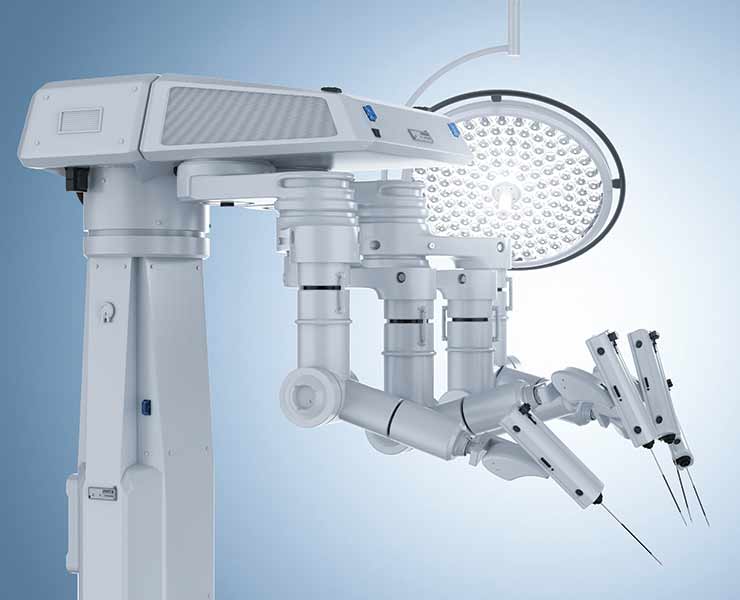
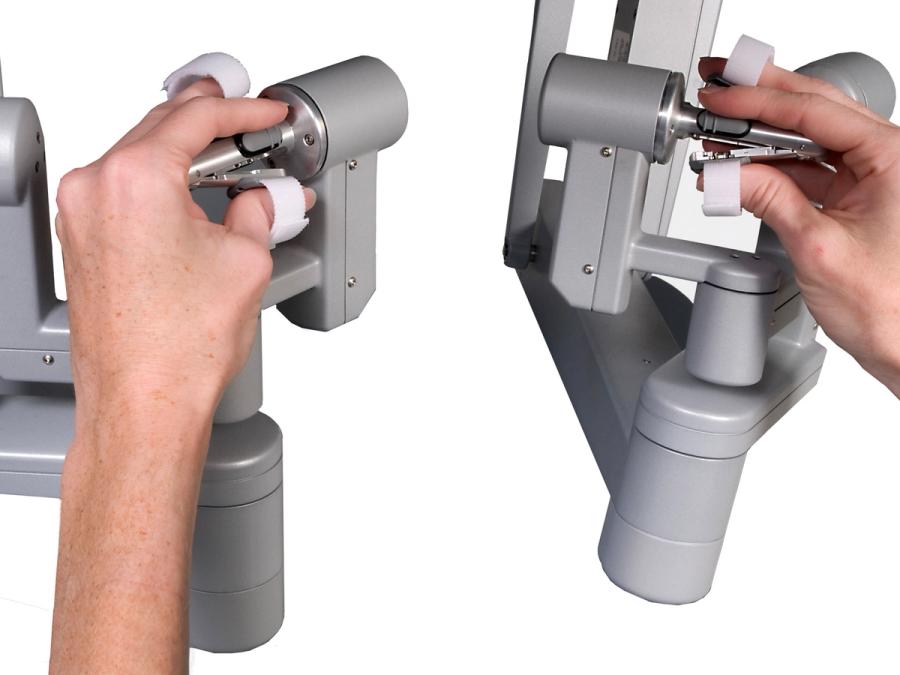
The demands are extraordinary: the gearbox must fit within a joint housing just a few centimeters in diameter while delivering enough torque to resist tissue resistance and maintain instrument stability. Precision planetary gears with backlash below 1 arcminute ensure that the surgical tip responds instantaneously to the surgeon’s console input, with no perceptible lag or lost motion. The coaxial design of the planetary gear allows motors to be mounted directly along the joint axis, creating slim, sterile instrument arms that can access anatomical spaces through ports as small as 8 mm. Furthermore, the smooth, vibration-free torque transmission of planetary gearing is critical when performing microsutures or dissecting fragile tissues where even microscopic tremors could cause irreparable damage.
CT Scanner Gantry Rotation
Computed Tomography (CT) scanners capture cross-sectional images of the human body by rotating an X-ray tube and detector array around the patient at speeds exceeding three revolutions per second. This rotating assembly, known as the gantry, can weigh several hundred kilograms and must maintain perfect rotational balance to ensure image clarity.

A planetary gear drives the gantry’s main rotation, converting high-speed motor input into the controlled, powerful torque needed to accelerate and decelerate the massive ring assembly within fractions of a second. The distributed load-sharing among multiple planet gears ensures exceptionally smooth rotation without the cogging or torque ripple that could introduce motion artifacts into the reconstructed images. For high-end CT systems capable of sub-millimeter slice resolution, the planetary gear’s torsional stiffness and low backlash are essential to maintaining the precise angular relationship between the X-ray source and detectors throughout the rotation cycle.
Automated Pharmacy Dispensing
Modern hospital pharmacies increasingly rely on robotic systems to automate medication storage, retrieval, and packaging—reducing human error and accelerating prescription fulfillment. These systems employ robotic arms, carousel mechanisms, and automated dispensing cabinets that must handle thousands of different drug packages with speed and accuracy.
In robotic dispensing arms, a planetary gear drives each joint to enable rapid traversal across shelf arrays while maintaining the precision needed to grasp individual blister packs, vials, or IV bags without damaging them. The compact coaxial design allows the drive system to fit within the robot’s slim arm profile, maximizing workspace reach within crowded pharmacy environments. For automated carousel and conveyor systems, planetary gears provide the reliable, continuous-duty motion required to transport medications 24/7, with efficiency ratings above 97% that minimize heat generation in enclosed cabinet spaces.
Laboratory Automation and Liquid Handling
High-throughput diagnostic laboratories process thousands of blood, urine, and tissue samples daily using automated liquid handling robots. These systems employ multi-axis gantries and pipetting arms that must position pipette tips over microplate wells with accuracy measured in tenths of a millimeter.
A planetary gear integrated into each linear and rotary axis of a liquid handler ensures that the pipetting head arrives at the correct well coordinates every time. The gear’s low backlash prevents positioning drift that could cause cross-contamination between samples—a failure mode with potentially catastrophic diagnostic consequences. In high-speed sorting and preparation stations, planetary gears enable rapid acceleration between wells while maintaining the smooth deceleration needed to prevent splashing or bubble formation in microliter-volume samples. The quiet operation of planetary gearing is also essential in laboratory environments where acoustic noise must be minimized to protect both personnel concentration and sensitive analytical instruments.
Medical Rehabilitation Exoskeletons
For patients recovering from stroke, spinal cord injury, or neurological disorders, powered exoskeletons provide robotic assistance to restore walking ability. These wearable devices feature motorized joints at the hip, knee, and ankle that must generate biologically appropriate torque while conforming to the patient’s natural gait pattern.
A planetary gear in each exoskeleton joint amplifies the torque from compact, lightweight motors to levels sufficient to support partial body weight and guide limb movement. The high torque density of planetary gearing is critical here: every gram of drive system weight adds to the metabolic burden on the patient, so minimizing mass while maximizing output torque directly impacts rehabilitation effectiveness. Backdrivability—allowing the patient to move the joint voluntarily when motor assistance is not needed—is another key advantage of certain planetary gear configurations, enabling natural, patient-initiated movement during therapy sessions.
Precision Infusion and Syringe Pumps
In critical care settings, infusion pumps deliver medications, nutrients, and fluids at precisely controlled rates—sometimes as slow as 0.1 milliliters per hour. The drive mechanism that pushes the syringe plunger or peristaltic tubing must provide smooth, continuous linear motion with no pulsation or variation.
A planetary gear couples the stepper or servo motor to the lead screw or roller mechanism, providing the high reduction ratio necessary to convert rapid motor rotation into extremely slow, steady plunger advancement. The gear’s exceptional efficiency and smooth torque transmission eliminate the jerky motion that could cause flow rate fluctuations, ensuring that potent drugs such as chemotherapy agents, vasopressors, or anesthetics are delivered at exactly the prescribed rate. The compact size of planetary reducers allows pump manufacturers to design portable, wearable infusion devices that patients can carry during ambulatory treatment.
MRI Patient Table Positioning
Magnetic Resonance Imaging (MRI) systems require patients to be positioned with millimeter-level accuracy within the magnet bore. The patient table must move smoothly in multiple axes—vertical elevation, horizontal translation into the bore, and sometimes tilt—while operating in the presence of extremely strong magnetic fields.
Non-magnetic planetary gear designs using specialized alloys or ceramic components enable motorized table positioning without interfering with the MRI’s magnetic field homogeneity. The gear’s smooth motion prevents vibration transmission to the patient, which is critical during long scan sequences where even slight movement can blur the resulting images. High reduction ratios allow the table to move slowly and precisely into the bore center, while still providing the torque to lift patients weighing over 200 kg.
The Precision Advantage
What unifies these diverse medical applications is the planetary gear’s fundamental architecture: a central sun gear, multiple planet gears orbiting within an internal ring gear, and a planet carrier output. This design inherently distributes load across multiple gear meshes, resulting in higher torque capacity, lower backlash, and smoother operation than conventional gear systems. In medical devices where patient safety and diagnostic accuracy depend on every motion, the planetary gear delivers the mechanical precision that turns engineering excellence into life-saving performance.
From the articulated joints of surgical robots performing microsutures to the rotating gantries of CT scanners capturing diagnostic images, the planetary gear serves as the silent precision enabler of modern medical technology. Its unmatched combination of compactness, torque density, accuracy, and smooth operation addresses the core mechanical challenges faced by device manufacturers across surgery, diagnostics, rehabilitation, and laboratory automation. As medical technology continues to push toward ever-greater miniaturization, accuracy, and patient outcomes, the planetary gear will remain a foundational component—transforming electrical signals into the controlled mechanical motion that heals, diagnoses, and sustains human life.


